...[I]f we teach all kids that there's a wide range of potentially healthy sexual and emotional relationships, and the only real trick (granted, it's a doozy) is finding partners who are enthusiastic about the same things you want, then there's room for a lot more people to pursue something personally satisfying at no one else's expense...To which Rabbit White wisely added that the first step is (surprise!) honest communication. But as I'm reading these feminist defenses of casual sex, I'm also wondering: Where in this discussion are all the men who have romantically pined for the women who mostly wanted to get laid? They do, in fact, exist, and I can't possibly be the only straight cis woman who has struggled with the guilt of having dated them.
Sunday, May 2, 2010
On having been the "man" everyone warned me about
It's been a couple months since Teen Vogue columnist Jessica Simmons wrote her much-linked post "Is Hooking Up Good for Girls?" about how casual sex apparently disempowers women, because apparently it leaves us pining in agony for men to commit to us. And Kate Harding has already written the great rebuttal:

Sunday, April 18, 2010
The Privilege of Not Defending Oneself

And I remember one poly-book-club meeting where someone suggested we all go around the table and tell everyone "why" we're poly. It irritated me, because it had nothing to do with the book we'd read, and do monogamous people ever go around a table explaining why they're monogamous? I politely listened to the chain of people paraphrasing The Ethical Slut, and I didn't disagree with any of it, except that I had to wonder about the poly community's talking-about-our-feelings fetish. When it got to me, I simply stated, "I'm in love with two people. I don't want to lie to either of them. ...That's it, really."
Monday, March 22, 2010
In Defense of Anonymity

I'd like to get rid of all the "anon" sign-offs and cyber avatars. What is everyone afraid of? Why can't we all celebrate who we are sexually? What are the concerns people have about claiming their sex-lives under their own name? As long as we continue to hide who we are sexually, we will continue to be manipulated by our repressed conservative society that really hates, or I should say "fears" sex.And she has an excellent point. But then, my real name isn't Annabelle, and I won't be publishing it here, even if Betty Dodson does judge me for it.
The moralists proudly shout their opinions from the roof tops while far too many in the sexual community sneak around under aliases...
Sunday, March 7, 2010
When Sex Negativity Is Kinda Hot
 I recently finished reading The Edge of the Bed: How Dirty Pictures Changed My Life by Lisa Palac, which I highly recommend, because I agree with almost everything she writes. The part especially sticking with me has been Chapter 6, in which she analyzes her kinky desires that don't just deny, but appropriate her anti-sex Catholic upbringing:
At its core, my Daddy fantasy isn't about my father but about Our Father Who Art in Heaven. I'd taken the dynamic of love and punishment, which terrorized me as a child and made me feel helpless -- kneeling down and sticking out my tongue to receive his body, whispering my most sinful transgressions in a dark confessional, doing penance to show my love -- and turned it into a powerful source of erotic pleasure. It wasn't a conscious decision, but then, sexual fantasies rarely are.
...Despite my fear that all of my intellectual processing would ruin by best sexual fantasy, it didn't. It's still a turn-on because I'm still struggling with the after-effects of Catholicism and I always will be.
Personally, unlike Palac, I was never raised with the idea of God as an old man who would send me to hell for sexual adventurousness. Instead, the messages that my sexual desires were wrong came from pop-psychology and a specific strain of feminism. Without God or hell, wanting men to dominate me sexually was a sin against Women's Liberation and a transgression against my Mental Health. My sex-negative clergy got most of its ideas from Andrea Dworkin. And I consciously rejected it years ago.
Sunday, February 28, 2010
An Open Letter to Marie Claire
 Dear Marie Claire Magazine,
Thank you for publishing Pamela Druckerman's, "How I Planned a Menage à Trois." For all the shock-value usually attributed to sexual exploration, Druckerman's focus on negotiating with potential partners over coffee is greatly refreshing. She resists the sensationalist cliché that threesomes are invariably traumatizing and the opposite sensationalist cliché that threesomes are as glamorous as they look in porn, and instead reports her honest experience. More of this, please.
However, I'm frustrated how Druckerman glosses over, "In practice, I was shaken up," in the last couple sentences. Up until that point, planning and having her threesome feels either fun or banal, and then she's "struck by how emphatically [she] want[s] [her] husband." Why then suddenly shaken up? Is she feeling jealous? Or does she feel that N or her husband have violated any of her boundaries? Or is she shaken up by others' judgments that she's "supposed" to feel shaken up? Druckerman shows so much introspection up until that point, but as soon as she decides that actually her desires are "conservative" (and therefore "normal"?), she quits analyzing. That strikes me as lazy journalism.
And since Druckerman has decided against having any more threesomes in her life, why doesn't Marie Claire feature any of the many women who have more - and more positive - experiences to share about their threesomes? Or any of the many women who have initiated them, as opposed to acquiescing to a man's fantasy? I respect Druckerman's choices, but there's also a huge community of polyamorists and swingers who could provide better insight into why some women really, really like group sex.
Yours sincerely,
Annabelle River
PS If you too would like to write the editor of Marie Claire, the email address on their website is joannacoles at hearst dot com.
Tuesday, February 16, 2010
Graphic Sexual Horror and the Ambiguity of Consent
This summary is not available. Please
click here to view the post.
Sunday, January 31, 2010
The New York Regional Mormon Singles Halloween Dance
The first time I heard the name Elna Baker was on the "Matchmakers" episode of This American Life radio show. Her segment on working for FAO Schwartz is well worth listening to: The beginning makes me laugh hard, and then it packs a sucker-punch of commentary on American racism and classism. Touched by Elna Baker's humor and poignancy, I went looking for her personal website, which has clips of her telling stories. Watching her first video clip, then, I was surprised to learn that Elna Baker is also a practicing Mormon committed to virginity-until-marriage. As she says of her dating experience for the laugh-line, "As a Mormon, I don't believe in having sex, and eventually, as a guy, he didn't believe in that. So atheists do have beliefs."
And I have to confess my gut-level reaction to Mormon abstinence. Because most of my prior awareness of Mormons comes from their financial and vocal support for Proposition 8, which stripped Californian gays and lesbians of civil rights, and their practice of security-detention for gay men who kiss on the cheek. My awareness of abstinence-only propaganda is that it's objectively ineffective, in addition to intentionally spreading misinformation, sexism, fear, shame, and homophobia. There are "purity balls" that promote fathers' ownership of their daughters' sexuality, and "virginity pledgers" with comparable STD and pregnancy rates to their more honest peers. I highly recommend Feministing's Jessica Valenti's eloquent writing on female disempowerment by "the virginity fetish" and defense of pre-marital sex.
And I have to confess my gut-level reaction to Mormon abstinence. Because most of my prior awareness of Mormons comes from their financial and vocal support for Proposition 8, which stripped Californian gays and lesbians of civil rights, and their practice of security-detention for gay men who kiss on the cheek. My awareness of abstinence-only propaganda is that it's objectively ineffective, in addition to intentionally spreading misinformation, sexism, fear, shame, and homophobia. There are "purity balls" that promote fathers' ownership of their daughters' sexuality, and "virginity pledgers" with comparable STD and pregnancy rates to their more honest peers. I highly recommend Feministing's Jessica Valenti's eloquent writing on female disempowerment by "the virginity fetish" and defense of pre-marital sex.
Sunday, January 24, 2010
A Plea for Truth in Advertising

And with so many better-organized feminists campaigning against "objectification" and "exploitation," I have to explain that I'm generally not bothered by advertising that links products to sexy, scantily-clad women. It's not clever advertising, but I like looking at sexy, scantily-clad women too. When I go to dance clubs or the dungeon, I often intentionally dress scantily and hope that people think I look sexy. I don't believe that finding someone physically attractive must be mutually exclusive to respecting their humanity.
What infuriates me is the repeated message that men have to trick women into sex with them. In addition to the ethical problem, it paints an awfully bleak picture of male heterosexuality: doomed to want sex with anti-sex, no-fun people like women.
The message is even clearer on Twix's main website, which has "interactive" versions of the commercials. The boy in the commercial invites the girl back to his apartment, she reacts, "What kind of girl do you think I am?!" and the viewer has a choice between "Be shallow" or "Be deep." The "shallow" option turns out to be telling the girl that he thinks she's sexy - the truth - to which she slaps him and stomps away. Then the video rewinds and gives the viewer another chance to make the "right" choice, which is to "be deep" and lie to her. Further on, clicking "Be honest" ("I just said all that stuff so I could get to know you a little better") will actually get you tased before the girl stomps away again. (How this translates to "Buy our candy bars" eludes me.)
So with my credentials of actually being a straight woman, I want to explain to the ad execs that such trickery is both insulting and really not necessary. Most of my sexual relationships started with telling each other something "shallow" or "honest" like, "I think you're sexy," or "I would like to get to know you better." Directness is refreshing. The gullible woman who pulls a taser on honesty does not speak for my gender.
I have a similar reaction to the woman in The Hangover spitting through the trailer: "Boys and their bachelor parties: It's gross." For the record, my husband and I had a joint bachelor/bachelorette party, and it wasn't our wildest party because we were both exhausted from wedding planning. But almost six months into marriage, we both still enjoy our whiskey and kinky play with other people. I don't binge-drink or party as hard or as often as I did, say, in college, but I did have a wonderful drunken Halloween grinding with a guy whose name I never got. Women can be hedonists, too.
So I haven't seen the movie, but I think the hero of The Hangover should get out of his lie-necessitating imminent marriage as soon as possible and find himself a woman who will go on the wacky hedonistic adventures with him, as an equal. We're out there.
And we're a lot more likely to sleep with you if you're honest with us.
Wednesday, January 20, 2010
Re-Defining Marriage, or Love for The Daily Show
I realize that I'm a couple days late by blogging standards, but I still want to join Anita Wagner, Alan, and Loving More in cheering for the polyamorous threesome on The Daily Show last Monday:
The poly folks come in at 3:10, but the whole clip is a good analysis of the marriage debates.
As the comments on Poly in the News agree (including one from George and Joy Reagan, the couple featured), The Daily Show did an impressive job of showing the poly interviewees as articulate, well-adjusted, sexy people, and getting its laughs at the expense of professional-comedian Jason Jones and his mock-sensationalism instead.
The segment also speaks well to trying to define my own heterosexual, polyamorous marriage, especially in its context of a fight for gay equality. The double standard is obvious and absurd: Heterosexuals already enjoy all kinds of "non-traditional" marriages, and yet the "traditional-marriage" lobby hasn't mounted any serious political campaigns against us.
In order to get my husband's and my marriage recognized by our families and by religious institutions, we did swallow a certain amount of pretense of "traditional" monogamy. Our vows promised, "I will be honest to you and trusting of you," and not fidelity; but we still smiled politely and silently when our parents' friends commented about us being "off the market." I stifled my laugh when our Catholic officiant asked me, "Do you believe that he will be as faithful to you as you are to him?" and simply answered, "Yes!"
But for all our half-lies to family and clergy, the U.S. government does not care. The county clerk who wrote our marriage license asked for our birthdays, our social security numbers, our birthplaces, and our professions. They did not ask our stance on adultery.
For that matter, we weren't legally required to hide the truth from our families or religious institutions either. We made the decision to avoid unnecessary drama, and we believe that full honesty with our lovers and closer friends is sufficient for our own consciences. But if we wanted to live more openly, we certainly could have told everyone we know, uninvited any disapprovers, gotten a civil judge or a Unitarian or a temporarily-ordained friend to officiate, and still had our legal wedding. The county clerks processing our name/address/social-security-number records still would never have known.
People may judge the Reagans for having a threesome on cable TV, but no one will "un-marry" them. And while non-monogamy is one of my especially personal issues, it is only one of the almost infinite ways to expose the myth of "traditional marriage" in the status quo.
Some anti-gay activists call gay marriage the "slippery slope" that will also legalize polygamy. And yes, re-defining marriage may convince some people that it's possible to re-define marriage. But pragmatically, legal recognition of gay marriage doesn't change the laws much. The parts of marriage that the American government regulates now - i.e. inheritance, taxes, child custody - have already evolved through feminism to look past which spouse has a pee-pee and which spouse has a vajayjay.
Pragmatically, being legally married to more than one person at a time would create a lot more unprecedented legal situations. If one person divorces out of a triad, is the remaining couple entitled to twice as much property because there are two of them? If someone with two spouses dies, which spouse inherits what? If someone with two spouses and no living will is in a vegetative state, and the spouses disagree on whether to keep them artificially alive, what then?
Also pragmatically, I'm okay with having only one of my relationships on government records, because my boyfriend and I don't have joint property or a joint residence. Part of the beauty of polyamory is that not all romantic relationships have to lead to marriage anyway.
So it makes perfect sense that America is opening up to legally recognizing gay marriage before it opens up to legally recognizing polygamy and polyandry. But from the perspective of my straight but "non-traditional" marriage, I too am watching the Perry v. Schwarzenegger case on pins and needles, praying for Judge Walker and the Supreme Court to show as much sense and humanity as The Daily Show writers.
| The Daily Show With Jon Stewart | Mon - Thurs 11p / 10c | |||
| No Gay Out | ||||
| ||||
The poly folks come in at 3:10, but the whole clip is a good analysis of the marriage debates.
As the comments on Poly in the News agree (including one from George and Joy Reagan, the couple featured), The Daily Show did an impressive job of showing the poly interviewees as articulate, well-adjusted, sexy people, and getting its laughs at the expense of professional-comedian Jason Jones and his mock-sensationalism instead.
The segment also speaks well to trying to define my own heterosexual, polyamorous marriage, especially in its context of a fight for gay equality. The double standard is obvious and absurd: Heterosexuals already enjoy all kinds of "non-traditional" marriages, and yet the "traditional-marriage" lobby hasn't mounted any serious political campaigns against us.
In order to get my husband's and my marriage recognized by our families and by religious institutions, we did swallow a certain amount of pretense of "traditional" monogamy. Our vows promised, "I will be honest to you and trusting of you," and not fidelity; but we still smiled politely and silently when our parents' friends commented about us being "off the market." I stifled my laugh when our Catholic officiant asked me, "Do you believe that he will be as faithful to you as you are to him?" and simply answered, "Yes!"
But for all our half-lies to family and clergy, the U.S. government does not care. The county clerk who wrote our marriage license asked for our birthdays, our social security numbers, our birthplaces, and our professions. They did not ask our stance on adultery.
For that matter, we weren't legally required to hide the truth from our families or religious institutions either. We made the decision to avoid unnecessary drama, and we believe that full honesty with our lovers and closer friends is sufficient for our own consciences. But if we wanted to live more openly, we certainly could have told everyone we know, uninvited any disapprovers, gotten a civil judge or a Unitarian or a temporarily-ordained friend to officiate, and still had our legal wedding. The county clerks processing our name/address/social-security-number records still would never have known.
People may judge the Reagans for having a threesome on cable TV, but no one will "un-marry" them. And while non-monogamy is one of my especially personal issues, it is only one of the almost infinite ways to expose the myth of "traditional marriage" in the status quo.
Some anti-gay activists call gay marriage the "slippery slope" that will also legalize polygamy. And yes, re-defining marriage may convince some people that it's possible to re-define marriage. But pragmatically, legal recognition of gay marriage doesn't change the laws much. The parts of marriage that the American government regulates now - i.e. inheritance, taxes, child custody - have already evolved through feminism to look past which spouse has a pee-pee and which spouse has a vajayjay.
Pragmatically, being legally married to more than one person at a time would create a lot more unprecedented legal situations. If one person divorces out of a triad, is the remaining couple entitled to twice as much property because there are two of them? If someone with two spouses dies, which spouse inherits what? If someone with two spouses and no living will is in a vegetative state, and the spouses disagree on whether to keep them artificially alive, what then?
Also pragmatically, I'm okay with having only one of my relationships on government records, because my boyfriend and I don't have joint property or a joint residence. Part of the beauty of polyamory is that not all romantic relationships have to lead to marriage anyway.
So it makes perfect sense that America is opening up to legally recognizing gay marriage before it opens up to legally recognizing polygamy and polyandry. But from the perspective of my straight but "non-traditional" marriage, I too am watching the Perry v. Schwarzenegger case on pins and needles, praying for Judge Walker and the Supreme Court to show as much sense and humanity as The Daily Show writers.
Sunday, January 10, 2010
Your Friendly Television Sex-Toy Vendors
This summary is not available. Please
click here to view the post.
Tuesday, January 5, 2010
Beyond The Green-Eyed-Monster
 Last weekend I went to a panel question-and-answer session geared toward newbies in the kink Scene. And the only question to specifically address non-monogamy was, "How do you deal with jealousy?" Which is the same first question I've gotten from most of my monogamous friends, and the same question that dominates a healthy percentage of polyamory discussion groups. It's an obvious question and an extremely legitimate one. But I don't understand how jealousy merits such be-all-end-all importance.
I don't pretend to be somehow immune to jealousy; of course I've been jealous of lover's other lovers before, and it's a miserable feeling. But then I have two options, which are: (1) Deal with it; or (2) Tell my husband and boyfriend that I want to be monogamous, in which case I would have to break up with at least one of them. And in the last three and a half years, there has never been a split-second that I honestly thought Option #2 could be less heartbreaking or melodramatic for me than dealing with jealousy.
How do I deal with jealousy? Well, how do I deal with sadness, or with anger, or frustration, or insecurity, or any other unpleasant emotion? My best jealousy-coping strategies suspiciously resemble the generalized coping strategies I've been using since I was fourteen and single: I rant in a private handwritten diary where it won't hurt anyone; I eat ice cream; I watch Buffy the Vampire Slayer. Sometimes I go for walks or sing karaoke. The Ethical Slut and Opening Up and non-monogamy message boards are full of great advice specifically addressing jealousy. But it's just an emotion like sadness or anger, and I don't feel a need to treat it that specially. It also fades over time, as I develop more experience with my lovers being with other people and then coming back to me.
In my experience, jealousy isn't the worst and certainly isn't the most interesting hurdle to polyamorous relationships. Society's prejudice stings too, as I learned from my poly friends fighting for custody of their children, and learned first-hand when my mother told me that my husband deserves a woman who can be faithful to him. My lovers' romantic difficulties and break-ups with other people also sting, because they make my lovers sad. Overall, most of the time, all the love and sex in my life make me pretty happy.
The discussion of how to deal with jealousy will go on, and of course it should. But there's really more to non-monogamy than this obsession with jealousy.
Thursday, December 17, 2009
Sex Clubs: A History Lesson
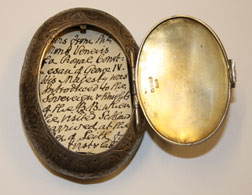 I love stumbling across alternative-sexuality history lessons. I love it because we're absent from most history accounts, due both to censorship and to our predecessors' desire for their own privacy. And then sexually liberated people and conservative reactionaries end up with the same misguided belief that rampant, shameless sexuality is something Westerners invented in the 1960's.
So I highly recommend Tony Perrottet's recent article for Slate.com, "Hellfire Holidays," about the sex clubs of 18th-century Britain. As Perrottet reports, "Sadly, during the prudish Victorian era, most references to these naughty clubs were scotched from the historical record. Horrified relatives burned embarrassing documents and club regalia. But their subversive antics survived in pornographic novels, travel guides to risqué tourist sites, and, of course, popular memory."
When most people first fall into an alternate-sex community, it does feel exotic and revolutionary. But seriously, the novelty and "naughtiness" wear off after a couple years. Despite getting off on exoticism, and despite mainstream shock, we the currently living haven't invented anything new. We have antecedents' example to follow and adapt; we simply have to study history that didn't make it to our textbooks.
Monday, December 14, 2009
The Advice Column and the Prostitute
First, thank you to LaPrincipessa for a great post on the gender double-standard in adultery. I say thank you both because LaPrincipessa makes good points, and because she alerted me to the news that Ashley Dupre, one of the prostitutes involved in the Eliot Spitzer scandal, now has her own dating advice column with the New York Post. I realize that the New York Post has the same owner as Fox News, and mostly offers the same grossly oversimplified right-wing propraganda and celebrity gossip, but there's an idea with serious potential. The first step toward empowering a stigmatized group - such as sex-workers - is allowing individuals to tell their own stories to a wide audience. Objectively, Ashley Dupre has a lot of experience with sex, and likely a different perspective from my own, and which makes me curious what she has to say. Also, for everyone protesting that Ashley Dupre is a shameful whore, cover pages like:
 continue to sell newspapers.
But then, the column itself disappoints me. Because Ashley Dupre has herself an attentive audience that she could enlighten on the realities of sex work and relationships, and so far all she's doing with it is repeating the same clichés we hear everywhere else. I don't find any of it explicitly offensive - which is more than I can say for more-mainstream Dear Abby or Ask Amy columns making the blogosphere rounds, or most of the New York Post. Ashley Dupre just prints (all heteronormative people's) meaninglessly broad questions (i.e. "Are there telltale signs a man isn't happy in his marriage?") and then answers with brief, cliché generalizations.
The one with which I personally would diverge is "Q: My boyfriend wants to know how many men I've slept with. Do I give an honest answer? A: You don't give him an answer at all. It's really none of his business (and vice versa)... Some things are better left unsaid." It's a perfectly ethical answer, but I'm curious why the advice-seeker's boyfriend wants to know. If he's prone to slut-shaming or uncontrollable jealousy, that should be relevant to whether the advice-seeker wants to date him. Personally, I don't care about anyone's tally, but hearing stories about my partners' exes helps me understand the person my partner is now. I don't demand 100% disclosure of everyone they ever touched before meeting me, because they deserve privacy and because some of those stories aren't as important or as interesting as others. But they're usually good stories. I also understand that most people have higher sexual jealousy than I do, in which case Dupre's advice is respectable. But it irks me that she writes as if all advice-seekers and all of their significant others will reach the same conclusions.
I suspect the culprit may be the New York Post, because Ashley Dupre does appear much more aware of human variation in her appearance on The View (which I also wouldn't normally cite for its affirmation of non-conformity). As she says in the clip below, "...And then there's the guy that screws around just because he can screw around. Most of the time, these are the men that should not be married. Or they should be in a relationship with someone who shares the same moral beliefs as them and be swingers...."
It's refreshing to see someone on a mainstream network talk-show talking so openly and shamelessly about sex work, and "I refuse to let what I did define me." I'm just crossing my fingers that her individual perspective may eventually shine through somewhere in her advice column, instead of merely repeating the New York Post's trite lowest-common-denominator drivel.
continue to sell newspapers.But then, the column itself disappoints me. Because Ashley Dupre has herself an attentive audience that she could enlighten on the realities of sex work and relationships, and so far all she's doing with it is repeating the same clichés we hear everywhere else. I don't find any of it explicitly offensive - which is more than I can say for more-mainstream Dear Abby or Ask Amy columns making the blogosphere rounds, or most of the New York Post. Ashley Dupre just prints (all heteronormative people's) meaninglessly broad questions (i.e. "Are there telltale signs a man isn't happy in his marriage?") and then answers with brief, cliché generalizations.
The one with which I personally would diverge is "Q: My boyfriend wants to know how many men I've slept with. Do I give an honest answer? A: You don't give him an answer at all. It's really none of his business (and vice versa)... Some things are better left unsaid." It's a perfectly ethical answer, but I'm curious why the advice-seeker's boyfriend wants to know. If he's prone to slut-shaming or uncontrollable jealousy, that should be relevant to whether the advice-seeker wants to date him. Personally, I don't care about anyone's tally, but hearing stories about my partners' exes helps me understand the person my partner is now. I don't demand 100% disclosure of everyone they ever touched before meeting me, because they deserve privacy and because some of those stories aren't as important or as interesting as others. But they're usually good stories. I also understand that most people have higher sexual jealousy than I do, in which case Dupre's advice is respectable. But it irks me that she writes as if all advice-seekers and all of their significant others will reach the same conclusions.
I suspect the culprit may be the New York Post, because Ashley Dupre does appear much more aware of human variation in her appearance on The View (which I also wouldn't normally cite for its affirmation of non-conformity). As she says in the clip below, "...And then there's the guy that screws around just because he can screw around. Most of the time, these are the men that should not be married. Or they should be in a relationship with someone who shares the same moral beliefs as them and be swingers...."
It's refreshing to see someone on a mainstream network talk-show talking so openly and shamelessly about sex work, and "I refuse to let what I did define me." I'm just crossing my fingers that her individual perspective may eventually shine through somewhere in her advice column, instead of merely repeating the New York Post's trite lowest-common-denominator drivel.
Wednesday, December 9, 2009
Experiments in Neurochemistry
 Since the last time I wrote about my premenstrual dysphoric disorder, I've had a couple particularly bad episodes of it, and I finally took all my friends' advice and went to a psychiatrist. Then, for the past month, I've been pondering what took me so many years. Part of it, I'm sure, was a general distrust of doctors and pharmaceuticals - anyone who stands to earn money by convincing me that my brain is "wrong" and that they can "fix" me. But some of my resistance has also been existential. As horrifically unpleasant as PMDD feels, it remains an intense passion. If my strongest feelings can be erased by taking pills, then what am I anyway? What does that mean for the rest of my emotions and for my personality? Is my entire consciousness mere hormone levels and neurochemistry?
Luckily, my psychiatrist earned my trust after asking if I've ever experienced panic attacks. I answered that I think I've had a couple in my life, but they're not a regular problem; I think the last one was a couple weeks before my wedding. She laughed and said, "That's normal; that's just part of being a bride." She didn't pretend that she could make me rational and happy all the time, or even that I should be rational and happy all the time. So I like her.
So for the last week, I've been exploring the sensation of being on a selective serotonin reuptake inhibitor. And it's been a pretty good week: All the little things that traumatize me on PMDD, or annoy me normally, have been mildly funny. On the first full day, I also had an intense dizzy spell that lasted almost two hours. But even then, I appreciated that I could explain to my co-workers, "I feel dizzy"; dizziness at the office doesn't have the stigma that crying does.
I've since lowered the dose, so the dizziness has been mild, but I'm still not entirely "myself." The SSRI-taking version of me is noticeably slower and more forgetful; my mind occasionally goes blank, even mid-sentence as I'm talking. But then, I also got through an entire month without dysphoria. The night that I would usually spend in the fetal position sobbing, instead I had dinner and great conversation with friends.
If "feeling like myself" means feeling like the 3/4 of time that I'm not premenstrual, then the SSRI is still much closer to "feeling like myself" than PMDD. I've always identified a bit with the absent-minded professor stereotype. So if I miss bits of conversation around me, is that the SSRI, or is that my natural daydreaming? I'll never know for sure.
Without the SSRI, if clients yell at me, how much of my distress is rational and how much is the PMDD? I'll never know for sure.
I'll be experimenting with a different SSRI next month to see if another version makes me less light-headed, but I'm entirely sold. Even if I still can't answer the questions of what the drugs mean for my "true" self. My "true" self is even more centered in my physical body than I thought.
Friday, December 4, 2009
A Poly Perspective on Celebrity Scandal
I was at my boring desk job today, and my co-workers were talking about the Tiger Woods scandal in my earshot. They know a lot more than I do about the Tiger Woods scandal, because I haven't read a single article past the headline - because I really don't care. I don't play or watch golf, and most athlete/Hollywood celebrity scandals are tediously interchangeable, and Tiger Woods and I just don't have much influence over each other's lives. I don't feel a need to start caring about him now; if you're reading this outside of the U.S. and don't know what I'm talking about, Google him.
But one of my co-worker's more incredulous comments made me cringe with silent frustration: "And he's married to a supermodel!! And he cheated on her anyway!"
Okay, so here's the thing about sex with more than one person: Sometimes it really has nothing whatsoever to do with the original partner. I'll admit, of course, sometimes it does. Sometimes people first fall out of love with their "primary" significant other for any number of examples of incompatibility, and they stick around a doomed relationship either because they're too afraid to be alone until they find the next partner, or because they're too afraid to hurt the other person's feelings (which invariably backfires), or because of habit. Then they lie to their partners or spite them, which is where the real betrayal happens. I take it (from osmosis) that Tiger Woods lied to a lot of women, which makes him a liar. The women who trusted him have every right to feel outrage toward a liar, and I wouldn't begrudge any self-righteous co-worker banter over that.
But, writing as an honest adulteress, sometimes people just have sex with more than one person because they're attracted to more than one person - not because there's anything at all wrong in the original relationship. No one would seriously argue that having the Beatles or show-tunes on my iPod means that I must not actually love 1990's alternative music after all. And most people concede that it is possible to love more than one parent, more than one child, or more than one friend. I have sex with my boyfriend because I enjoy sex with my boyfriend, not because I don't enjoy sex with my husband. I quite emphatically enjoy sex with both of them, and I also enjoy that their bodies and specific preferences are different, because I enjoy variety. We're not insulting each other by rejecting monogamy. I like when my my partners are dating smart hotties; egotistically I like that they have good taste in women.
Yes, of course, cheating is different. But how many cheaters realize that honest non-monogamy exists as an alternative? I cheated on an ex a few times before I had ever heard of polyamory, because I didn't know then how else to handle being in love with two people. Would Tiger Woods have been more honest with the women in his life if he had had less justification to assume they'd react so very badly? Maybe and maybe not, but I wouldn't know; we're not that close.
Furthermore, there's really no correlation between supermodels and better marriages. Physical beauty is useful for initially attracting people, but it doesn't do much for sustaining meaningful relationships. Physical beauty doesn't even necessarily correlate with better sex; beauty doesn't signify sexual confidence, or experience, or creativity, or generosity, or compatible kinks, or stamina, or empathy, or any number of qualities that matter more to sexual satisfaction than looking pretty in photographs does.
I appreciate jaw-droppingly-hot TV stars like Gale Harold and Alyson Hannigan as much as the next person, but I still don't imagine that they're sexy enough to make monogamy sound tempting to me.
So... how is a modeling career in any way relevant?
I'm not sure, but I do know how often the banter of monogamous people feels alienating to me.
But one of my co-worker's more incredulous comments made me cringe with silent frustration: "And he's married to a supermodel!! And he cheated on her anyway!"
Okay, so here's the thing about sex with more than one person: Sometimes it really has nothing whatsoever to do with the original partner. I'll admit, of course, sometimes it does. Sometimes people first fall out of love with their "primary" significant other for any number of examples of incompatibility, and they stick around a doomed relationship either because they're too afraid to be alone until they find the next partner, or because they're too afraid to hurt the other person's feelings (which invariably backfires), or because of habit. Then they lie to their partners or spite them, which is where the real betrayal happens. I take it (from osmosis) that Tiger Woods lied to a lot of women, which makes him a liar. The women who trusted him have every right to feel outrage toward a liar, and I wouldn't begrudge any self-righteous co-worker banter over that.
But, writing as an honest adulteress, sometimes people just have sex with more than one person because they're attracted to more than one person - not because there's anything at all wrong in the original relationship. No one would seriously argue that having the Beatles or show-tunes on my iPod means that I must not actually love 1990's alternative music after all. And most people concede that it is possible to love more than one parent, more than one child, or more than one friend. I have sex with my boyfriend because I enjoy sex with my boyfriend, not because I don't enjoy sex with my husband. I quite emphatically enjoy sex with both of them, and I also enjoy that their bodies and specific preferences are different, because I enjoy variety. We're not insulting each other by rejecting monogamy. I like when my my partners are dating smart hotties; egotistically I like that they have good taste in women.
Yes, of course, cheating is different. But how many cheaters realize that honest non-monogamy exists as an alternative? I cheated on an ex a few times before I had ever heard of polyamory, because I didn't know then how else to handle being in love with two people. Would Tiger Woods have been more honest with the women in his life if he had had less justification to assume they'd react so very badly? Maybe and maybe not, but I wouldn't know; we're not that close.
Furthermore, there's really no correlation between supermodels and better marriages. Physical beauty is useful for initially attracting people, but it doesn't do much for sustaining meaningful relationships. Physical beauty doesn't even necessarily correlate with better sex; beauty doesn't signify sexual confidence, or experience, or creativity, or generosity, or compatible kinks, or stamina, or empathy, or any number of qualities that matter more to sexual satisfaction than looking pretty in photographs does.
I appreciate jaw-droppingly-hot TV stars like Gale Harold and Alyson Hannigan as much as the next person, but I still don't imagine that they're sexy enough to make monogamy sound tempting to me.


So... how is a modeling career in any way relevant?
I'm not sure, but I do know how often the banter of monogamous people feels alienating to me.
Monday, November 30, 2009
Hitchcock and the Tramp
Recently, I finally got to see Alfred Hitchcock's 1946 film noir classic Notorious. And it was delightfully refreshing - especially in light of the inordinate amount of press going to the Twilight series these days, and its message that True Love (TM) must be chaste, obsessive, and monogamous, and that True Love (TM) mostly comes to good girls who wait.
Back in 1946, Alfred Hitchcock made his movie about the great romance of, in the parlance of the times, a "loose woman." As Notorious opens, our heroine Alicia Huberman, played by Ingrid Bergman, is freely enjoying the drinking and casual-sex parts of life. Into her life walks Mr. Devlin, played by Cary Grant, who talks her into a job with the U.S. government spying on Nazi war criminals. Alicia and Devlin quickly fall into a love affair, even as bad-girl Alicia smirks, "Every time you look at me I can see it running over the spokes: ...Once a tramp, always a tramp," and later, "You're sore because you've fallen for a drunk." Censorship rules at the time prohibited nudity or kissing more than three seconds on film; Hitchcock followed only the letter of those laws with the intimately sexy sequence starting at 3:30 below.
Not giving away much, as it becomes reasonably predictable, Alicia also starts having sex with the Nazi that Devlin has hired her to spy on. Which she discloses to her lover right after giving him other espionage-related intelligence: "Just a minor item but you may want it for the record. You can add Sebastian's name to my list of playmates." His initial reaction is predictably hurt and hurtful: "It wouldn't have been pretty if I had believed in you." But for all the accusations that Alicia is a loose woman, a tramp, an alcoholic, or a whore, her sexual charms very effectively earn the Nazis' trust, which is what makes her a competent spy. She knows exactly who she is, and why she does what she does; and what she does involves putting herself in great physical danger for the cause of fighting fascism. Without her "loose" sexual confidence, she wouldn't be as capable of a heroine.
This is not a film about polyamory, because obviously there is no honesty in reporting one's lover's activities to his enemy's government. But it is a film that exposes the falsehood that romantic love - with all the glory of Ingrid Bergman and Cary Grant - must necessitate sexual exclusivity. The "tramp" risking her life for patriotism blends the binary between "bad girl" and "good girl." And in the end, love proves more important (and more interesting) than sexual jealousy.
Especially with all the New Moon billboards I have to pass on a daily basis, I am grateful to Alfred Hitchcock for a thriller glorifying the romance and the accomplishments of a slut.
Sunday, November 22, 2009
Lolita Wolf in the New York Times
Check out her beautiful photo essay, "The Kinky Lover":
http://www.nytimes.com/packages/html/nyregion/1-in-8-million/index.html#/lolita_wolf
http://www.nytimes.com/packages/html/nyregion/1-in-8-million/index.html#/lolita_wolf
Politics and Pretty Boys Without Shirts
 So the Playgirl shots of Levi Johnston were released yesterday. I have to admit that I, like Jolie du Pre, have really been looking forward to them. ...Except, the couple pictures that have been released without charge aren't too exciting.
Surely relevantly, I'm sick to death of hearing about his ex-future-mother-in-law, whom I like to refer to either as "Bible Spice" or "Caribou Barbie." (I wish I could take credit for coming up with either.) For weeks, my Google Reader has been flooded with articles exposing the arch-conservative's hypocrisy, lies, and incompetence - sometimes with good satire. And honestly, I can't pay attention anymore. In her ideology, liberals are the direct tools of Satan, so the frothing wrath of liberals only helps her. All I want is for her to fade back into obscurity where she belongs, and I already regret this post's collaboration in keeping her famous.
But if I can't make her disappear, I can certainly enjoy a hot guy with his shirt off. Especially a hot guy who promotes safer sex on TV (however inarticulately). After Johnston came to fame on the heels of a politician who stands by abstinence-only policies that didn't even work for her own household and who charged rape victims for their own evidence, his juxtaposed sex-positivism is refreshing.
Watch CBS Videos Online
But after all that anticipation and political debate, the pictures are pretty bland. Yes, he's a very pretty boy. But at least in the teaser shots, he looks just like every other shirtless pretty teenage boy on television. For all the spite against Caribou Barbie and the hypocritical sex-negativity she stands for, I somehow expected the actual photographs of her nemesis to be more... interesting. (If anyone who has paid $19.95 to Playgirl for the rest of the shots found any more compelling, please do tell!)

Furthermore, I also find it important to note the double standard in Levi Johnston's current opportunities vs. Bristol Palin's. They participated in the exact same act at the same time together: Now he gets the glamorous contracts and Fleshbot Award, and she gets all the responsibility of raising a baby. Although Johnston has also claimed on TV that he would love to spend more time with his baby. (Who knows?) And I'm sure the media would love to buy a comparable Bristol-Palin-porn shoot. (Although she'd be subject to intense slut-shaming, if the reaction to Meghan McCain in pajamas is any indication.)
I appreciate Levi Johnston's calls for the comprehensive sex ed that he didn't get, but he's still an inarticulate teenager. ...But he does look pretty without a shirt.
Enjoy the pretty boy without a shirt.
Thursday, November 19, 2009
The Semantics of BDSM vs. Kink
 I recently had the pleasure of dinner with someone who had traveled from another state to give a presentation at my local dungeon. Over dinner, we discussed his leadership work with his local Next Generation group. (For those who don't know, "The Next Generation" or "TNG" is a common name for BDSM-centered social groups for younger adults, usually age 18-35. There is no central TNG leadership as far as I'm aware, but there are TNG's in many cities throughout the U.S.) One of the changes he's been trying to make in his local TNG, he explained, was semantic. Instead of using the acronym "BDSM," (Bondage/Discipline, Dominance/Submission, Sadism/Masochism), he refers to the groups' members exclusively as "kinky." Instead of "munches," they have "meet and greets."
"What's the difference?" asked everyone at our dinner table after the dungeon presentation.
"Oh, there's no difference at all, really. But for some reason, it seems to scare people less. When I tell people that I'm into BDSM, I get all the scared looks. But if I say I'm a little kinky, people are more likely to smirk or find it hot. It's more 'naughty' and less scary. Even if I'm doing the exact same things."
Which launched a conversation on whether or not we should be obligated to worry about scaring people outside the community. If we really cared what mainstream society thought of us, we probably wouldn't have met in our local dungeon in the first place. Regardless of vocabulary, openly embracing alternative sexuality requires a certain amount of ability to ignore judgment of others.
"But," he argued, "it's really not for vanilla people. I mean, greater acceptance is a perk, but I think de-mystifying is more important to people who are kinky but are still scared to admit it. If changing the semantics makes them feel more comfortable about joining us, then that's great."
Which brings back my clear memories of worrying that kinky desire made me a bad feminist, and/or crazy, and/or unlovable, and how those worries decimated my self-esteem in college. I can't say now if I might have read and absorbed SM 101 earlier if it had been called "Kink 101." (To maintain my honest disclosures, I still haven't read SM 101.) But I can't begrudge anything that might help nervous, newbie kinksters feel less freakish than I did.
At the same time, though, I fought hard for my acceptance of BDSM and for the courage to start going to munches. So I have an instinctual resentment to any implication that I ought to be more considerate of people who still think my lifestyle is scary. I know that it isn't. Most of my first munch revolved around a game of Scrabble. The first time I saw other people having sex in front of me (at my first BDSM party), I was eating brownies on the other side of the room, and the couple people I knew there were eating brownies with me and quoting Monty Python. I keep a public blog about my scary, scary sexuality now, and yet (alas) I still spend more hours per week in my fluorescent-lit office cubicle with bad coffee than I do actually having kinky sex. I don't feel even a little bit scary, and caring what other people think is exhausting.
So I'm unlikely to entirely drop the words "BDSM" or "munch" from my vocabulary. I use "kink" and "meet and greet" interchangeably with them, because they mean the same thing. But I can't help but wonder whether or not changing such semantics really would work for changing minds, or how one would even find closeted kinksters to ask them.
Friday, November 6, 2009
Sexy Violence in the Pentecostal Hell House
For two primary reasons, I generally avoid writing about the American Moral-Majority-type Evangelical Christian movement. First, I think they already get overwhelmingly more attention than they deserve, and second, I don't want to humor the part of their binary-based ideology that classifies every person as either (a) Christian or (b) sexually liberal, and defines both camps in part by their mutual enmity. But I'm going to break my own boycott for a moment, because I was that enthralled by This American Life's recently repeated episode featuring Hell House.
As Ira Glass explains about ten minutes into the episode:
It unnerves me because, as intended, the impassioned shrieks make me momentarily forget my rational arguments about there being more than two potential lifestyles in all of human possibility. The violence shocks. It's terrifying, and thereby riveting theater. Staged violence has been holding audience attention at least since Oedipus killed his own father and then gouged out his own eyes, more than four hundred years before Jesus was born.
But fear makes an ironic tool for promoting chastity, because fear is sexy. That's how it grabs such rapt attention in the first place. Fear and good sex both defy reasonable arguments; they both tap us into powerfully primal, impulsive forces. Personally, few things snap me into a feeling horny as instantaneously as a lover's hand firmly on my throat. Fear forces me to focus all of my attention, and to give up the illusion that I can control everything. It's sexy as hell.
I can only imagine that, if I believed that everyone without shame of their sexuality went to hell, hell would be even sexier.
Which George Ratliff notices while watching the 2000 Hell House auditions:
It's too easy to point out all the levels of absurdity and offense of the premise, from the explicit blaming-the-rape-victim to the implication that just listening to non-Christian music will kill you. What's more interesting about Liz Simmons's acceptance speech is her Texan-accented cheeriness:
And the reason that so many teenagers audition for Hell House - and the reason so many other teenagers will pay $7 to watch - is that they've already figured out that portraying sex and violence is exciting.
As Ira Glass explains about ten minutes into the episode:
In 1999, documentary filmmaker George Ratliff read about a church in Cedar Hill, Texas, which is a suburb of Dallas, that was staging a re-creation of the Columbine Massacre. That church, Trinity Church, was putting on a haunted house, called Hell House. They'd been doing it every year for years, each Halloween. The Columbine scene was just one scene of about a dozen. There was also an abortion scene, there was a scene where a gay man dies of AIDS, and a scene where a mom meets a man on the internet and then deserts her family for that man... And the point is: Devils are around us, trying to trip us up, every day. Sin is real; the devil's real; so you better get right with God.Which I was ready to dismiss as more generic conservative preaching - until I heard the actual sound-clip of teenage actors reenacting the death of Cassie Bernall (renamed "Carrie"). George Ratliff narrates the extreme violence onstage, including real handguns and props, and then we hear hysterical screaming and sobbing teenage voices: "Do you believe in God? Yes! I said do you believe in God? Yes, I believe in God!" and a gunshot. This was recorded in October 1999, only six months after the actual shooting. And despite my lifetime of secular liberalism, the sound-clip spooks me exactly as much as it's supposed to.
It unnerves me because, as intended, the impassioned shrieks make me momentarily forget my rational arguments about there being more than two potential lifestyles in all of human possibility. The violence shocks. It's terrifying, and thereby riveting theater. Staged violence has been holding audience attention at least since Oedipus killed his own father and then gouged out his own eyes, more than four hundred years before Jesus was born.
But fear makes an ironic tool for promoting chastity, because fear is sexy. That's how it grabs such rapt attention in the first place. Fear and good sex both defy reasonable arguments; they both tap us into powerfully primal, impulsive forces. Personally, few things snap me into a feeling horny as instantaneously as a lover's hand firmly on my throat. Fear forces me to focus all of my attention, and to give up the illusion that I can control everything. It's sexy as hell.
I can only imagine that, if I believed that everyone without shame of their sexuality went to hell, hell would be even sexier.
Which George Ratliff notices while watching the 2000 Hell House auditions:
The girls all want to be the suicide girl or the abortion girl, because those are the roles where you get to scream and cry and emote the most... Nearly everybody wants to play a sinner. Nobody wants to play a saint... Maybe it's just more fun to be evil onstage than good. Maybe playing a church-going, God-fearing Christian is just not that interesting if you are a church-going, God-fearing Christian. The organizers usually have to go out and recruit some hapless kids to play the good Christian roles...He then plays a clip of Pentecostal teenager Liz Simmons accepting a "Suicide Award" for her portrayal of a character who goes to a rave, "sips her spiked drink, freaks out, gets gang-raped, and ends up killing herself, after admitting that her dad had molested her as a child."
If you ask the teenagers straight up if they have fun pretending to shoot their classmates or do drugs at a rave, they're all good Christian kids and know better than to admit that they enjoyed themselves... But Hell House is the biggest event of the year for Trinity Church. After three weeks of performances... the kids all get dressed up to the nines for an event that is the equivalent of prom night for them. They call it the Hell House Oscars.
It's too easy to point out all the levels of absurdity and offense of the premise, from the explicit blaming-the-rape-victim to the implication that just listening to non-Christian music will kill you. What's more interesting about Liz Simmons's acceptance speech is her Texan-accented cheeriness:
Well, I couldn't have done it without my rapers, so thank you Brent and David. And I just want to say it was really an honor to do this part. At first I was real uncomfortable with it, you know, when I heard that I was going to have to raped, and I was like, okay, what's that gonna be like, but it ended up being a lot of fun, and- [Laughter.] Okay, wait, I didn't say that right. No, I just really got to, got to meet a lot of people that I didn't know, and I had a- [Laughter.] Okay, this is only getting worse.And then it would be too easy to point out that Liz Simmons didn't learn anything at all about drugs, or suicide, or rape, or even correct vocabulary word for "rapist." Obviously gaining a deeper understanding is not the point. The intended point is to panic teenagers out of sex and violence.
And the reason that so many teenagers audition for Hell House - and the reason so many other teenagers will pay $7 to watch - is that they've already figured out that portraying sex and violence is exciting.
Subscribe to:
Posts (Atom)